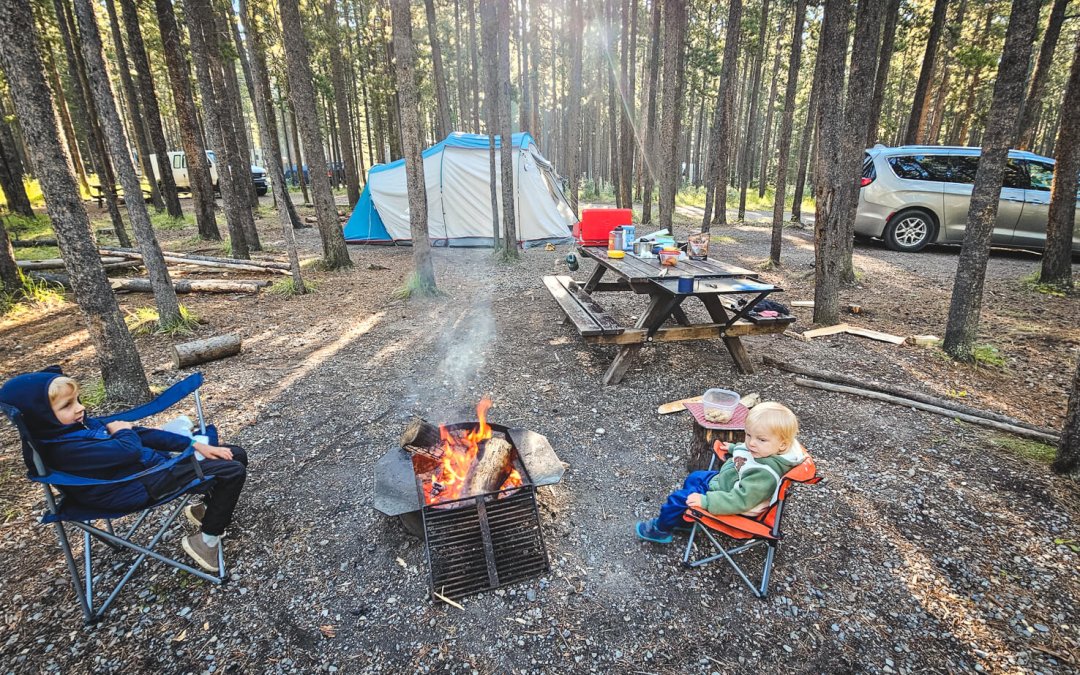
Camping with kids is one of those magical family experiences that looks dreamy on Instagram: happy children roasting marshmallows, parents relaxing beside a crackling campfire, everyone smiling…
Reality? Someone forgot socks. Somebody else suddenly needs to pee every seven minutes. Your toddler found mud and covered their whole body with it. And you’re wondering why you packed four headlamps but somehow zero spoons.
But here’s the thing: camping with kids really is amazing. It just works better when expectations are somewhere between “storybook family adventure” and “tiny wilderness survival mission.”
Whether you’re planning your first family camping trip, figuring out camping with toddlers or babies, or simply searching for practical family camping tips, a little preparation goes a long way.
Over the years, we’ve discovered plenty of camping hacks for parents that make outdoor adventures easier—and help create the fun memories you actually remember later.
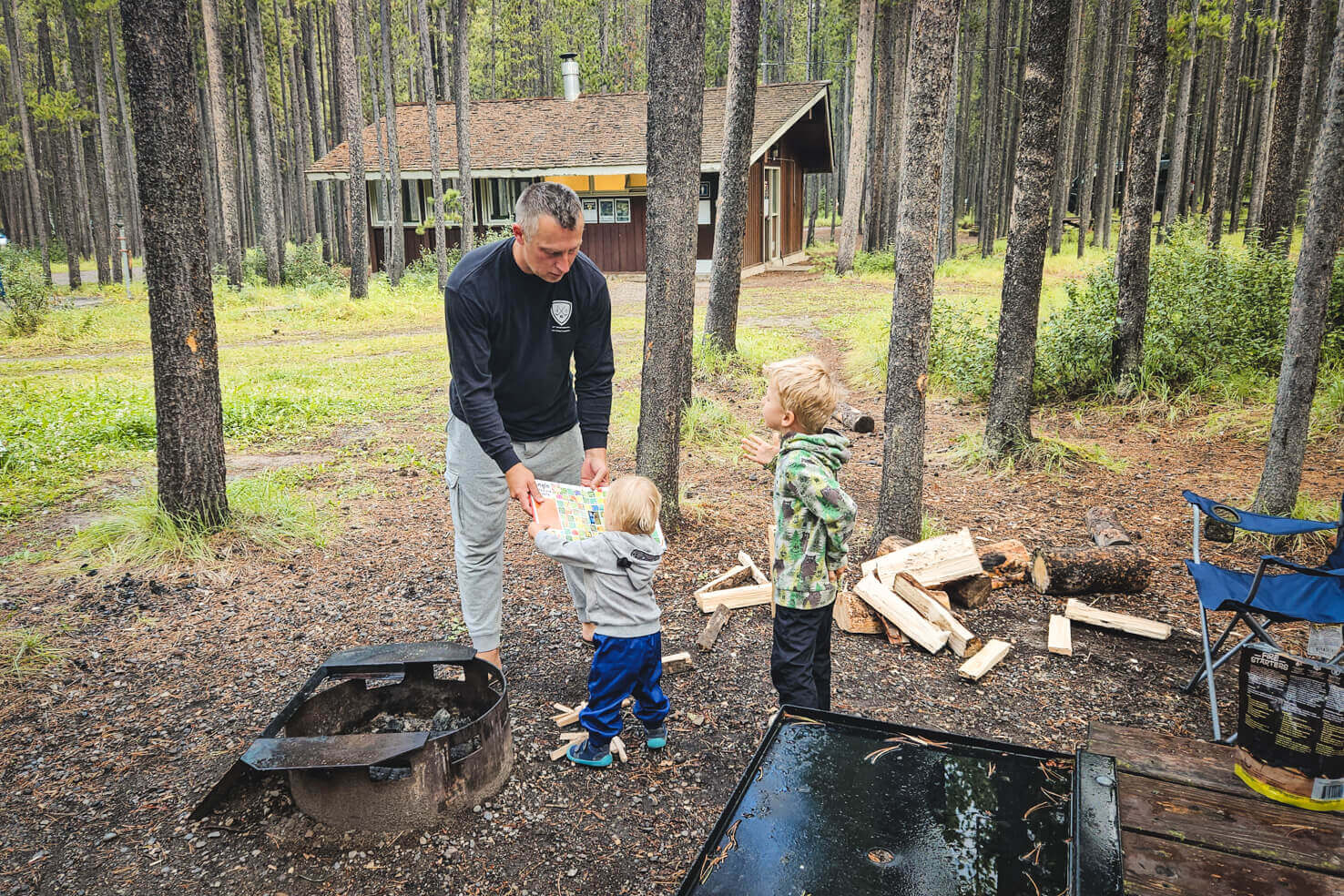
So, if you’re planning a camping trip with kids, here are real-life tips and family survival secrets that can save your sanity and help make your next camping adventure a whole lot more fun.
Table of Contents
Mindset Tips for Happy Family Camping
These set expectations and help parents enjoy the trip more.
1. Lower Expectations (Way Lower)
This may be the most important camping tip of all.
If you’re picturing peaceful mornings sipping coffee while your children quietly admire nature, let’s gently bring those expectations down a few notches.
Kids don’t camp like adults.
They camp by collecting random sticks, running in circles, asking for snacks nonstop, getting mysteriously filthy within four minutes, and turning tiny pebbles into treasured discoveries.
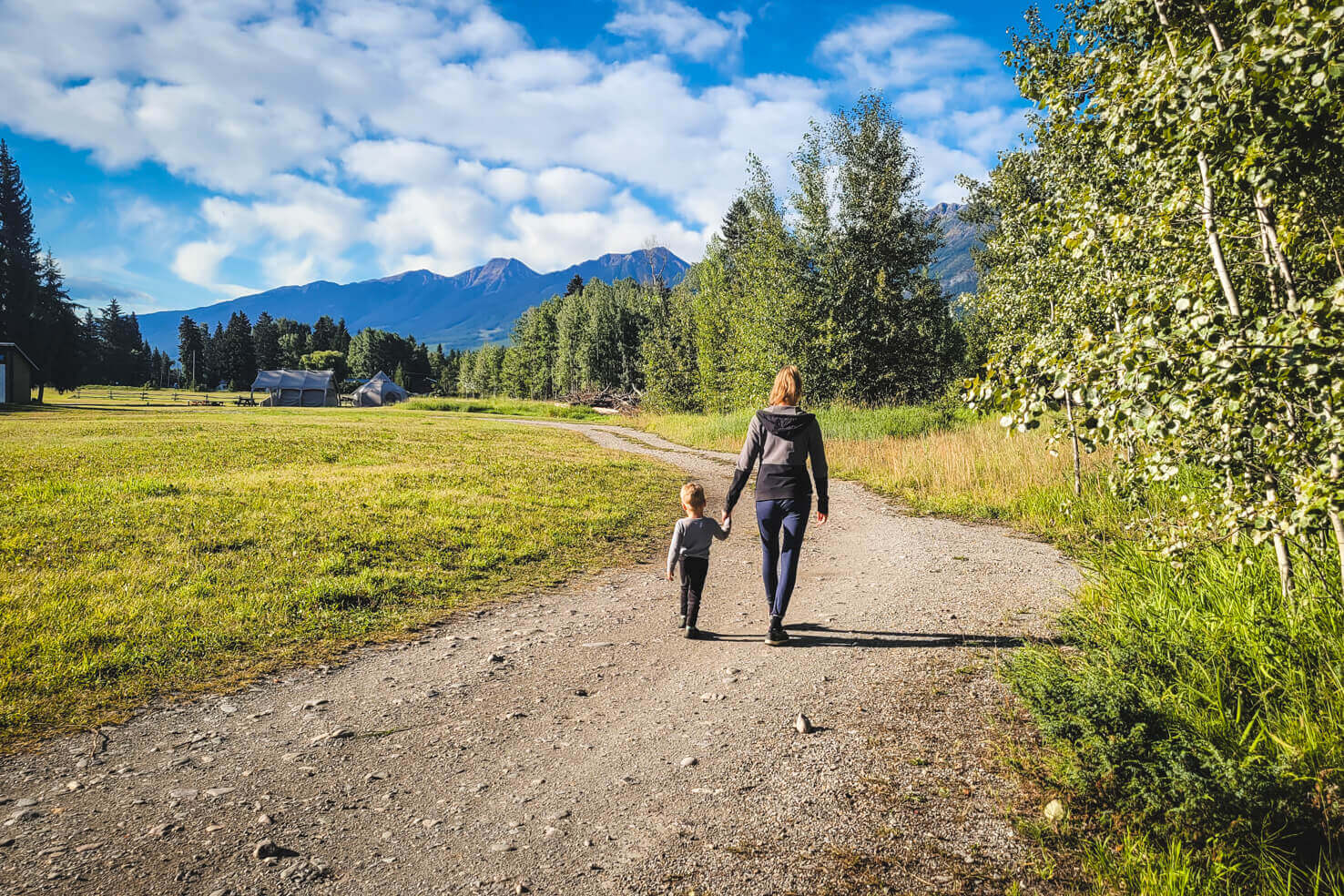
And honestly? That’s kind of the point.
So, you can, of course, plan a hike, but just be prepared if your kids are more interested in collecting rocks in the campground. A trick we used plenty of times – convincing them that trails in the mountains have the coolest rocks and bringing a small pouch where they can collect some. Worked every time!
Camping with children becomes much more enjoyable when you stop trying to create a perfect trip and start embracing the chaos.
2. Accept Dirt as a Lifestyle
The sooner you accept this, the happier you become. Your children will be dirty. Extremely dirty.
Camping children somehow combine dirt, sunscreen, food crumbs, and mysterious stickiness.
Resist the urge to constantly clean everyone.
Nature mess is part of childhood. Besides, no one at the campground judges muddy kids. They’re all muddy.
I understand you don’t want to clean for weeks after a camping trip, so for bedtime hygiene, it’s a good idea to have a shower at the campground.
3. Keep Bedtime Flexible
This hugely depends on the age and what your kids are used to from home.
Camping bedtime rarely follows normal rules. Kids are excited. There are campfires. Neighbors are laughing. Someone spotted a squirrel.
Trying to enforce a strict bedtime schedule often creates stress. Camping bedtime can simply become: “Let’s see what happens.”
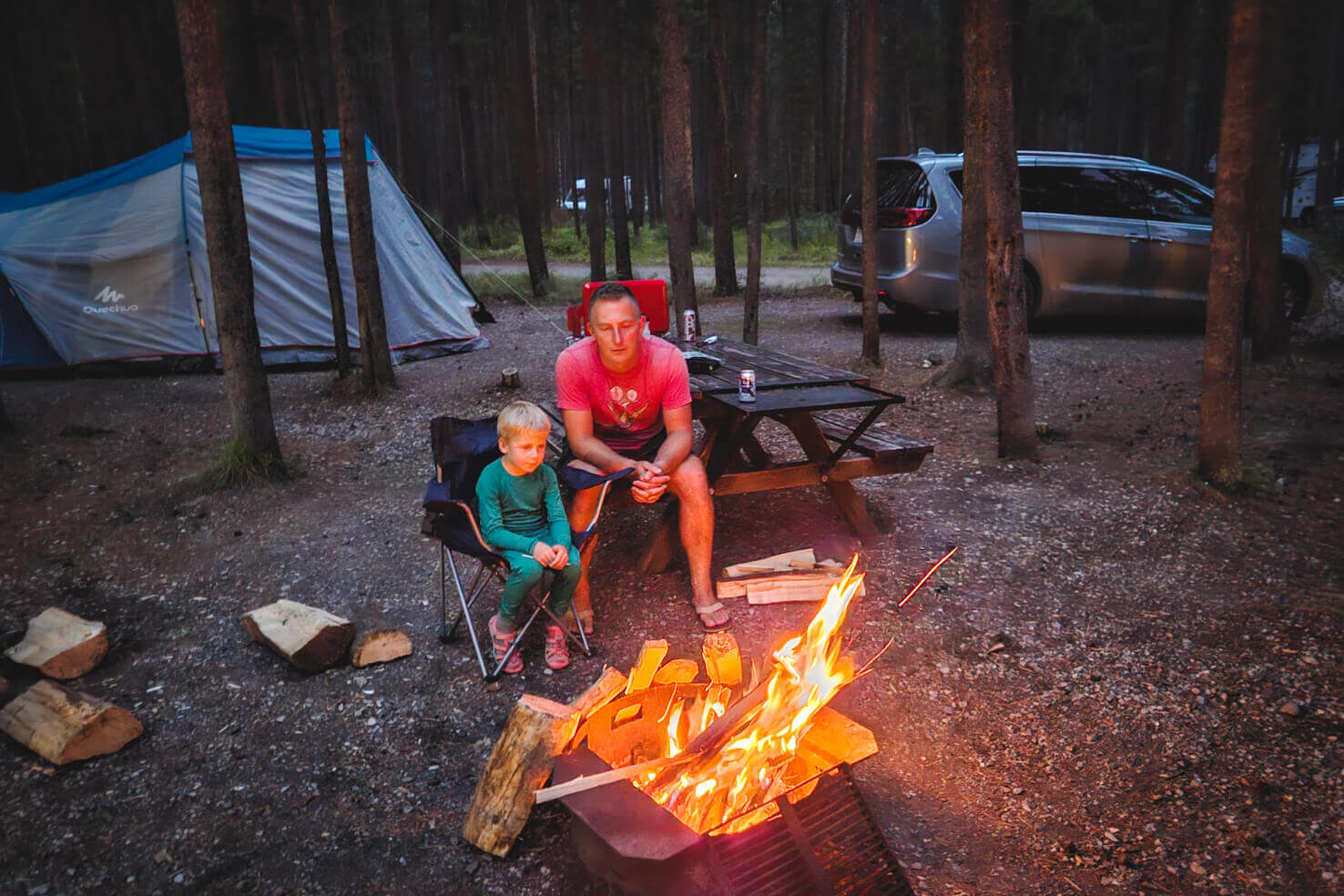
That being said, when our kids were babies and young toddlers, we tried to follow our regular bedtime routine, with books and all. Sometimes that was helpful; sometimes it wasn’t – especially in June, when it’s light out till 11 pm; kids don’t care that it’s “time to sleep”.
4. Don’t Overschedule Every Minute
You do not need:
9:00 hiking
10:15 fishing
11:30 scavenger hunt
12:45 lunch
Kids naturally create adventures outdoors. Sometimes they’ll spend forty-five minutes moving rocks. And somehow, it’s the highlight of the trip.
Leave space for unplanned fun.
5. Remember: Kids Won’t Remember Perfection
Years from now your kids probably won’t remember matching camping outfits, fancy camp meals or perfectly packed bins.
They’ll remember campfires, roasting sausages, headlamp games, sleeping in tents and exploring outside.
And maybe that one time somebody accidentally burned breakfast or a ladybug sat on their nose. Those become family legends.
Planning & Packing Tips Before You Leave
Everything that happens before arriving at the campground.
6. Start Small Before Planning a Big Camping Adventure
Dreaming of a week-long mountain camping trip?
Maybe don’t start there.
For your first family camping experience, keep things simple:
- Stay one or two nights
- Choose a campground close to home
- Pick somewhere with bathrooms
- Stay near a playground or lake
Last year, at the beginning of the camping season, we booked a night at Calaway Park Campground, which is about 30 minutes from our house. While it’s not the most exciting location, the reason was simple – tryout.
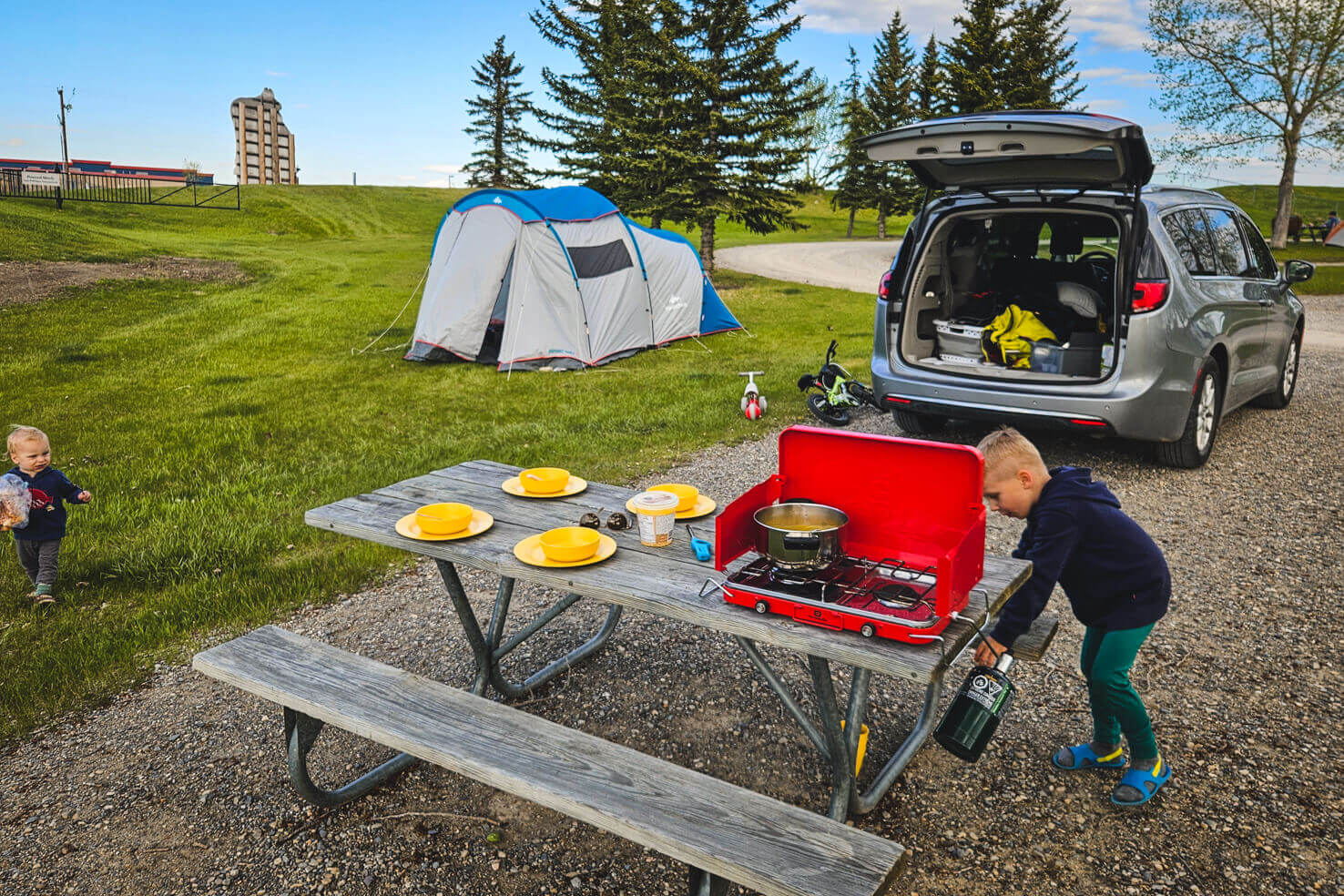
We were trying out our camping setup and testing whether kids could fall asleep while it was light until 11 pm (luckily, they could).
If a disaster struck and everyone was losing their minds, we could easily pack up and drive home.
This short trip gave everyone a chance to learn what works, what doesn’t, and what adjustments are needed for next time.
Kids were learning a whole new routine: sleeping in tents, being outdoors all day, different sounds at night, and no easy access to their usual comforts. And little by little, our camping trips started building their confidence.
7. Keep a Camping Bin Ready at Home
One of the biggest camping hacks?
Create a permanent camping box.
After your tryout camping trip, you know what you need, so save yourself time by keeping some essentials always packed and ready to go.
Store camping essentials together:
- Headlamps (+extra batteries/charger)
- Bug spray
- Bear spray (essential in the Rockies)
- Sunscreen
- Roasting sticks
- Wipes
- First aid kit
- Tablecloth
- Sitting pads
Then when a spontaneous camping opportunity appears, you aren’t running around the house searching for headlamps.
Future-you will be incredibly grateful.
Want to make camping with kids easier? You don’t need to set up a tent or buy any camping equipment! Check out our campervans by clicking below:

8. Bring Way More Clothes Than You Think You’ll Need
Camping math works differently.
One child: Three shirts per day. Possibly four.
Kids find mud, puddles, lakes, dirt, and mystery substances.
I always pack extra socks, warm layers, rain gear, backup shoes, and our beloved Iksplor merino base layers.
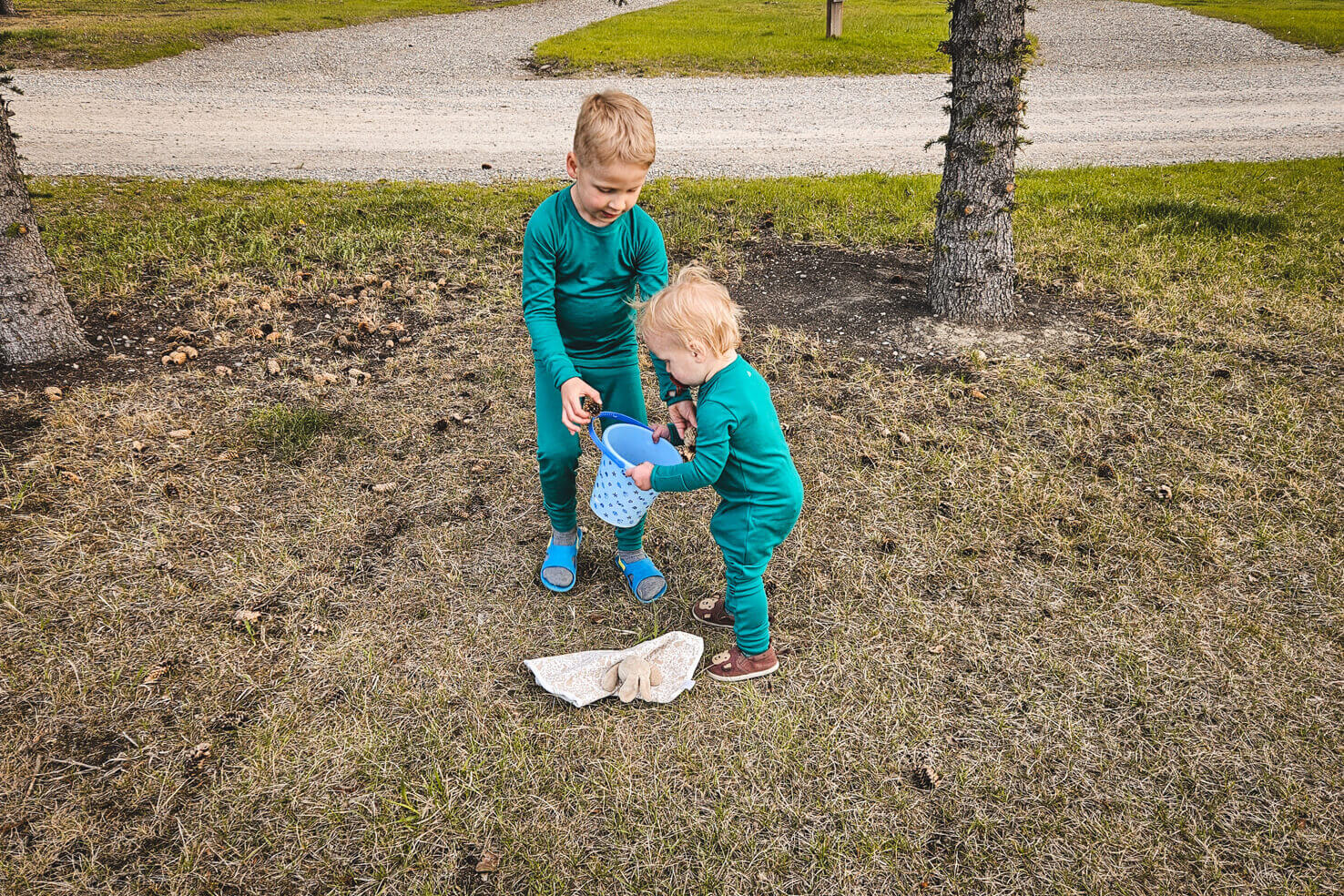
Let me explain:
- socks – because kids always find puddles, creeks or any sort of water
- warm layers – always helpful if they want to stay up late, especially in our Rockies, where snow can come any day of the year
- rain gear – so no amount of rain can ruin our fun (even if the weather forecast doesn’t call for rain – this is crucial)
- backup shoes – because dry feet are happy feet (and even backup shoes are sometimes not enough, and you end up drying the shoes under the hand dryer in the bathroom)
- Iksplor merino base layers (you can use code travelwiththesmile10 for 10% off)- the perfect layer for every season, all day, every day. Camping pyjama? Check! Early morning warm clothes? Check! Cozy campfire clothes? Check! Comfortable hiking clothes with UPF? Check!
You will not regret overpacking clothes.
Choosing the Right Campground
This deserves its own section because it’s one of the biggest factors in a successful trip.
9. Choose Kid-Friendly Campgrounds
Not all campgrounds are created equal.
When camping with children, I don’t believe the campground itself can make or break your trip. It’s the parents’ attitude that can do that.
But still, to make things easier for everyone, these are the things worth looking for:
- Playgrounds
- Beaches
- Short walking trails
- Flush toilets
- Bike paths
- Open grassy spaces
- Nearby attractions
Happy kids = happier parents.
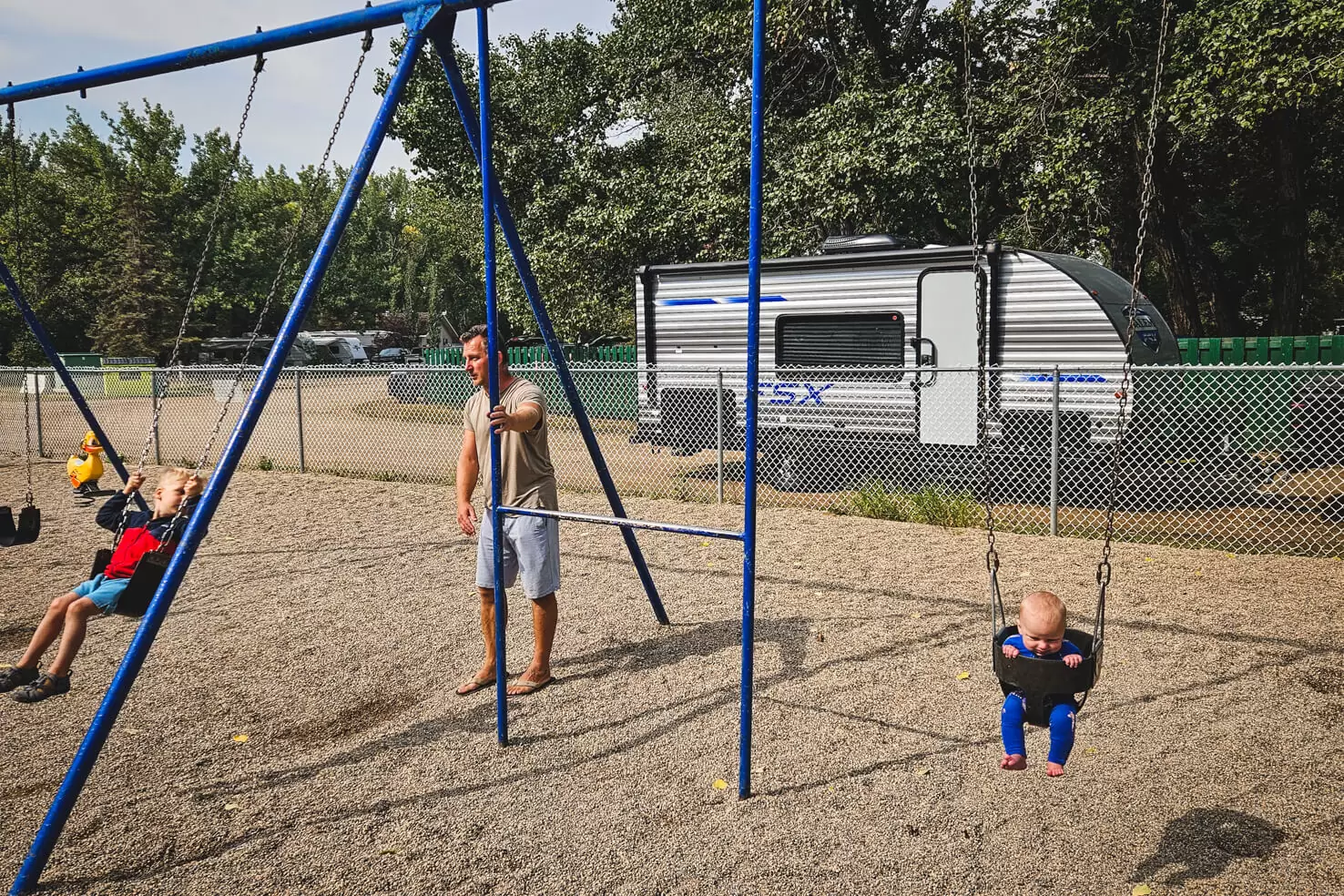
If kids have room to explore, they’re far more likely to enjoy the camping experience.
Using our not-so-exciting campground choice from before, Calaway Park Campground, it ticked 5 boxes out of 7 boxes, which was enough for us to have a great time.
Camping Hacks to Keep Kids Happy & Entertained
If kids are having fun, camping gets dramatically easier for everyone.
10. Give Kids Their Own Gear
Children love feeling involved.
Small camping gear can instantly create excitement:
- Tiny backpack
- Headlamp
- Binoculars
- Magnifying glass
- Camping chair
- Sleeping bag
- Water bottle
When kids have their own camping items, they suddenly become invested in the adventure. It’s a great time for them to be involved in planning, packing, and carrying family camping gear.
Bonus: they might even carry some of their own stuff.
Might.
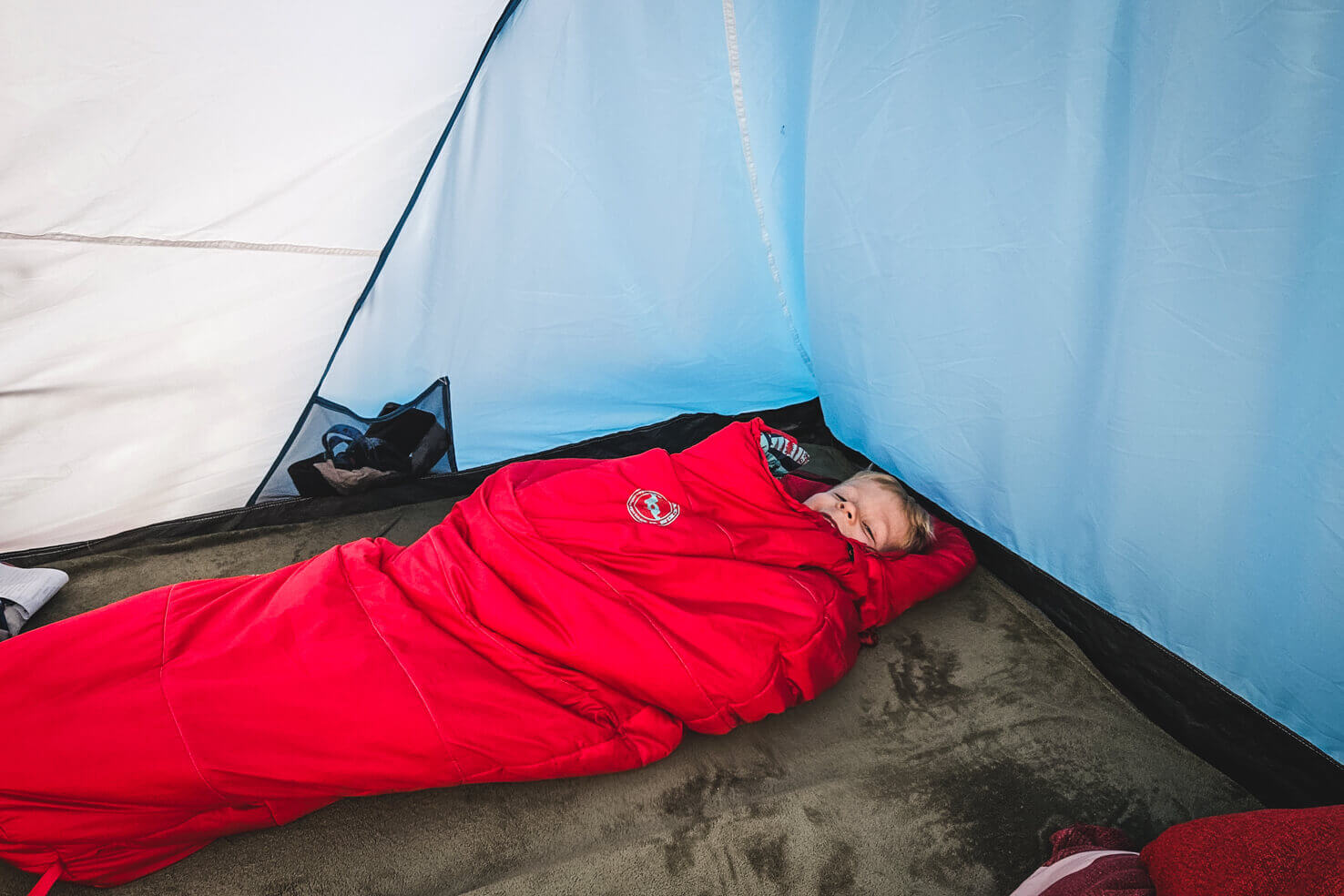
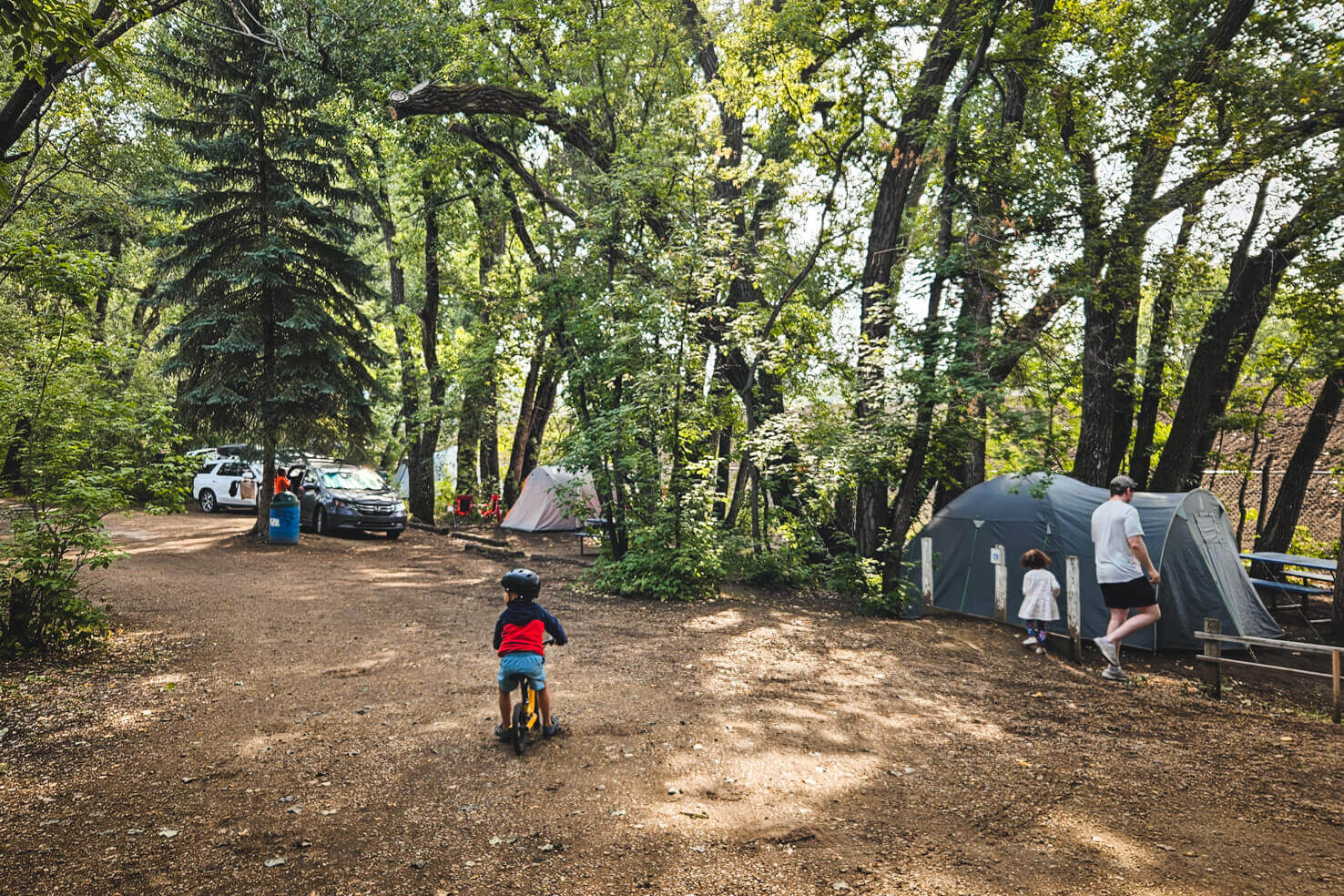
11. Bring Bikes, Scooters, or Ride-On Toys
This is one of those camping hacks that feels almost unfair.
Many campgrounds have loops and roads perfect for riding.
Bikes create instant entertainment, independence, movement, and occupied children. Parents everywhere know that a child happily riding laps around a campground is a beautiful thing.
I don’t think I’ve ever visited a campground with families around that didn’t have bikes.
12. Create a Kid Camping Treasure Hunt
Nature scavenger hunts are pure camping gold.
Challenge kids to find random things you see around the campground:
- a pinecone
- smooth rock
- red leaf
- squirrel
- funny-shaped stick
Or make it even easier for you and download our Camping Scavenger Hunt with pictures kids can colour. This should buy you some time to relax in your hammock or at least finish your drink in peace.
This keeps kids busy and turns simple walks into adventures.
13. Bring Rain Activities & Rain Gear
Because eventually, rain happens. Even if the weather forecast didn’t call for rain the last time you checked.
Camping with children gets much easier when you prepare for bad weather.
I highly recommend letting your kids have fun in the mud and rain, instead of forcing everyone to hide in the tent; therefore, good rain gear is crucial.
These are often the most fun memories for kids.
Rainy-day ideas, since they will eventually have to spend some time inside the tent:
- card games
- coloring books
- magnetic games
- sticker books
- LEGO
- Yoto player
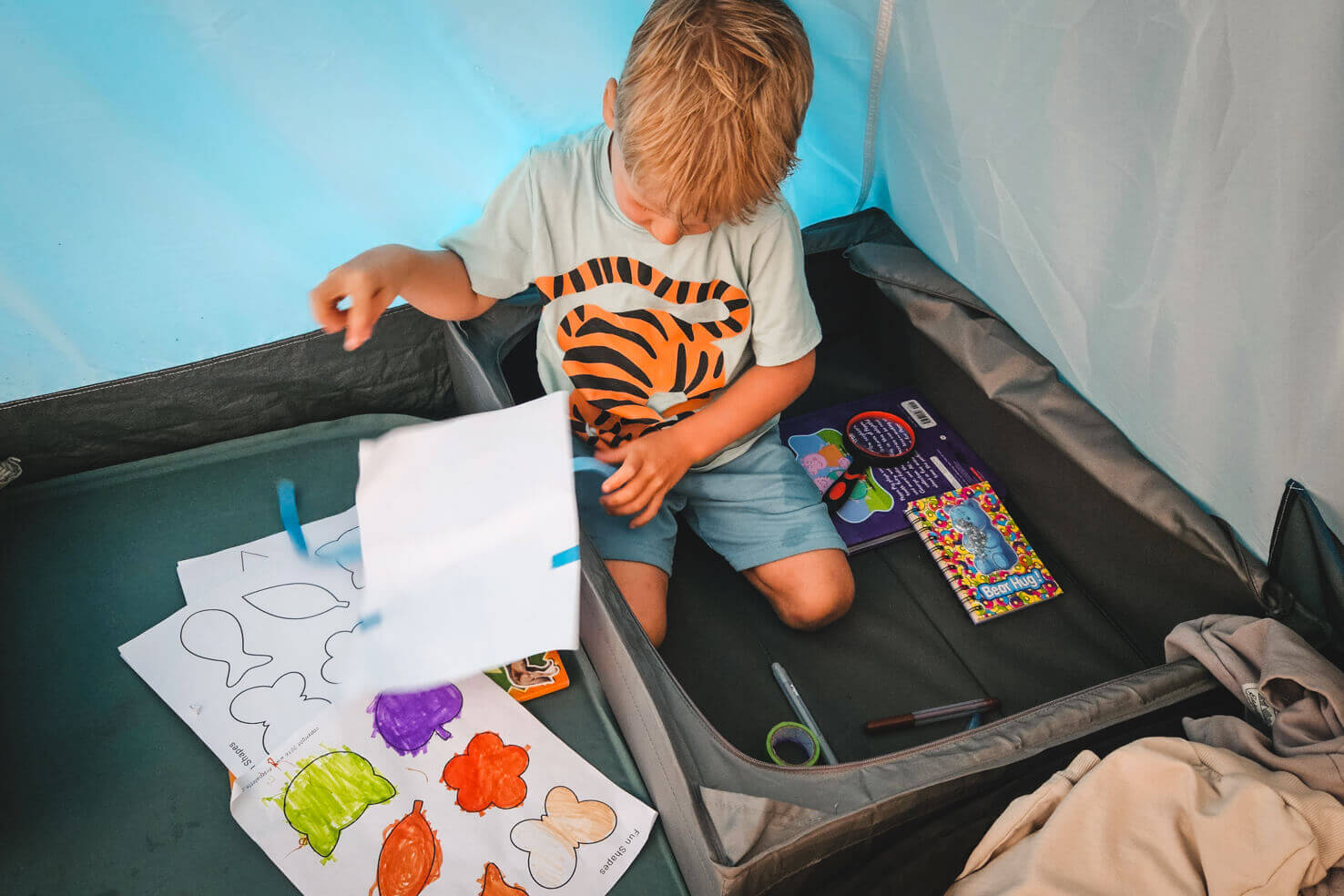
Another fun activity is challenging your older kids to come up with their own games with things they can find around the campground, such as acorns or leaves.
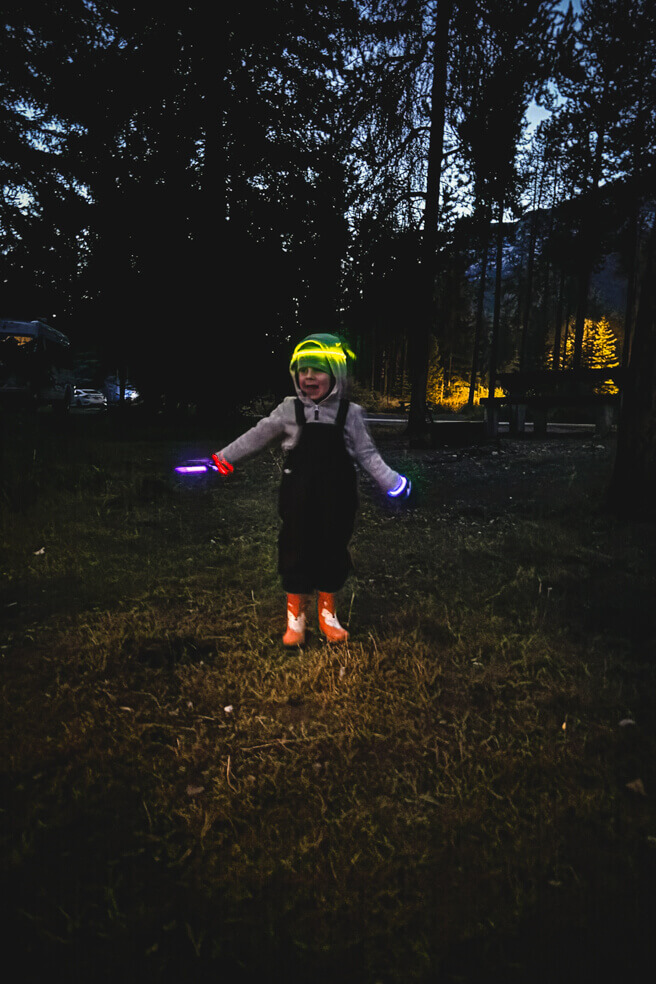
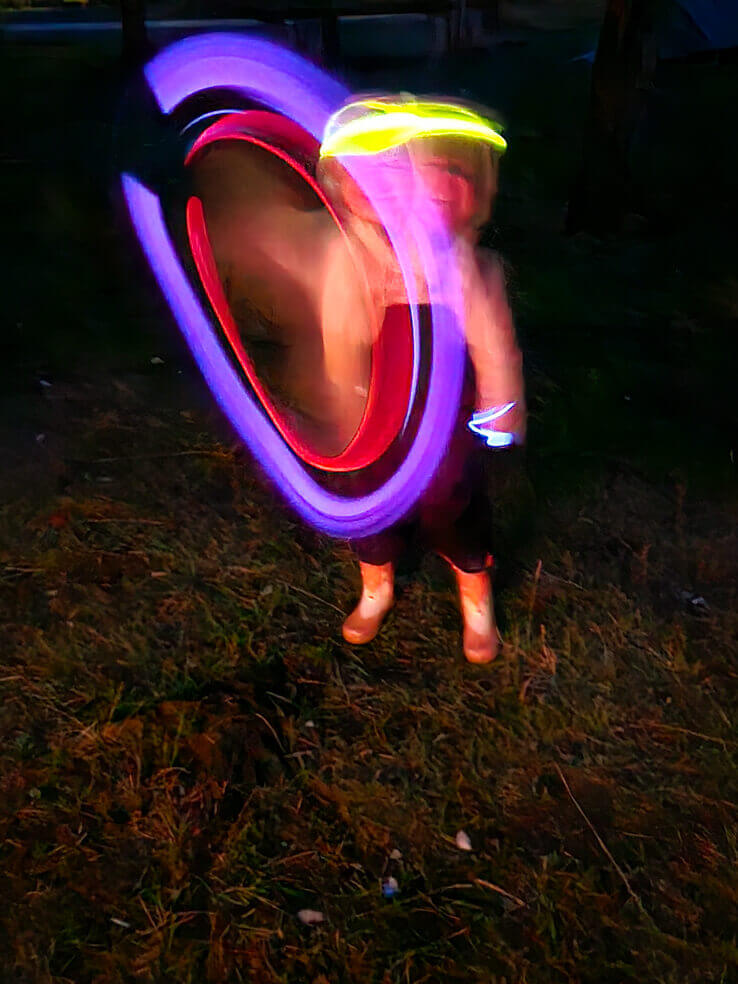
14. Bring Glow Sticks
Glow sticks deserve their own section.
Camping glow sticks can become:
- necklaces
- games
- tent markers
- nighttime safety tools
Also, children believe glow sticks possess magical powers.
15. Give Kids Freedom to Explore
One of the biggest reasons kids love camping?
Freedom.
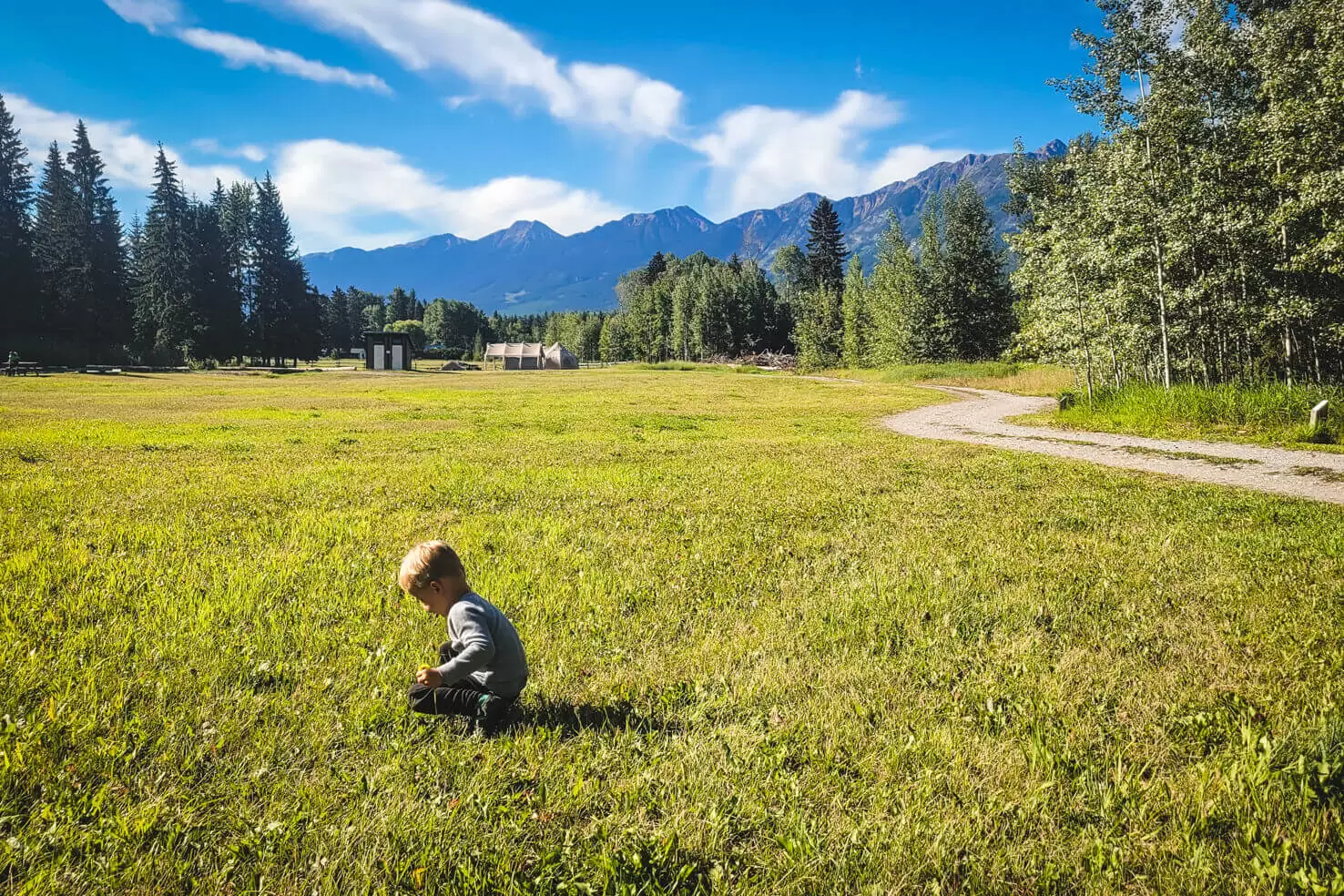
Kids often become fascinated by simple things outdoors—campfires and open spaces can be endlessly entertaining. They become explorers without realizing it because their surroundings are unbelievably inviting.
Give them safe space to:
- collect sticks
- explore trails
- examine bugs
- build tiny forts
Nature becomes the entertainment.
No screens required.
Camping Food & Meal Hacks
16. Plan Easy Camping Meals
This is a big one!
This is not the weekend to test recipes or even cook if you’re camping with small children.
We learned that camping food must follow these rules: it should be simple, fast, and have minimal cleanup.
The very first time we went camping with both kids, they were 8 months and 4 years old. My plan was to make a simple pasta with scrambled eggs. That sounds simple enough when you’re home, or both kids are old enough to play around the campsite.
But since our little one was most interested in crawling outside of the tent (so one adult had to always be with him), and our older son wanted to bike around the campground he didn’t know, the simple meal suddenly took time I didn’t have. And, of course, then there’s the cleanup part when one of us had to leave the campsite to wash the dishes.
My point – 2 adults are not enough with 2 little kids.
Next time, we were smarter. Our meals went something like this:
Breakfast & Lunch:
- Zucchini tots I premade at home
- Egg & veggie omelet I premade at home (and warmed up on the stove)
- Pancakes I premade at home
- Yogurt and fruit
- Oatmeal with fruit
- Sandwiches
The only thing I prepared at the campsite was tea for adults and milk for kids.
Dinner:
- Sausages grilled on the campfire
- Meals from the deli section of the nearby grocery store
- Picking up pizza on the way to the campsite
Sometimes we eat dinner after adventuring and before coming back to the campsite.
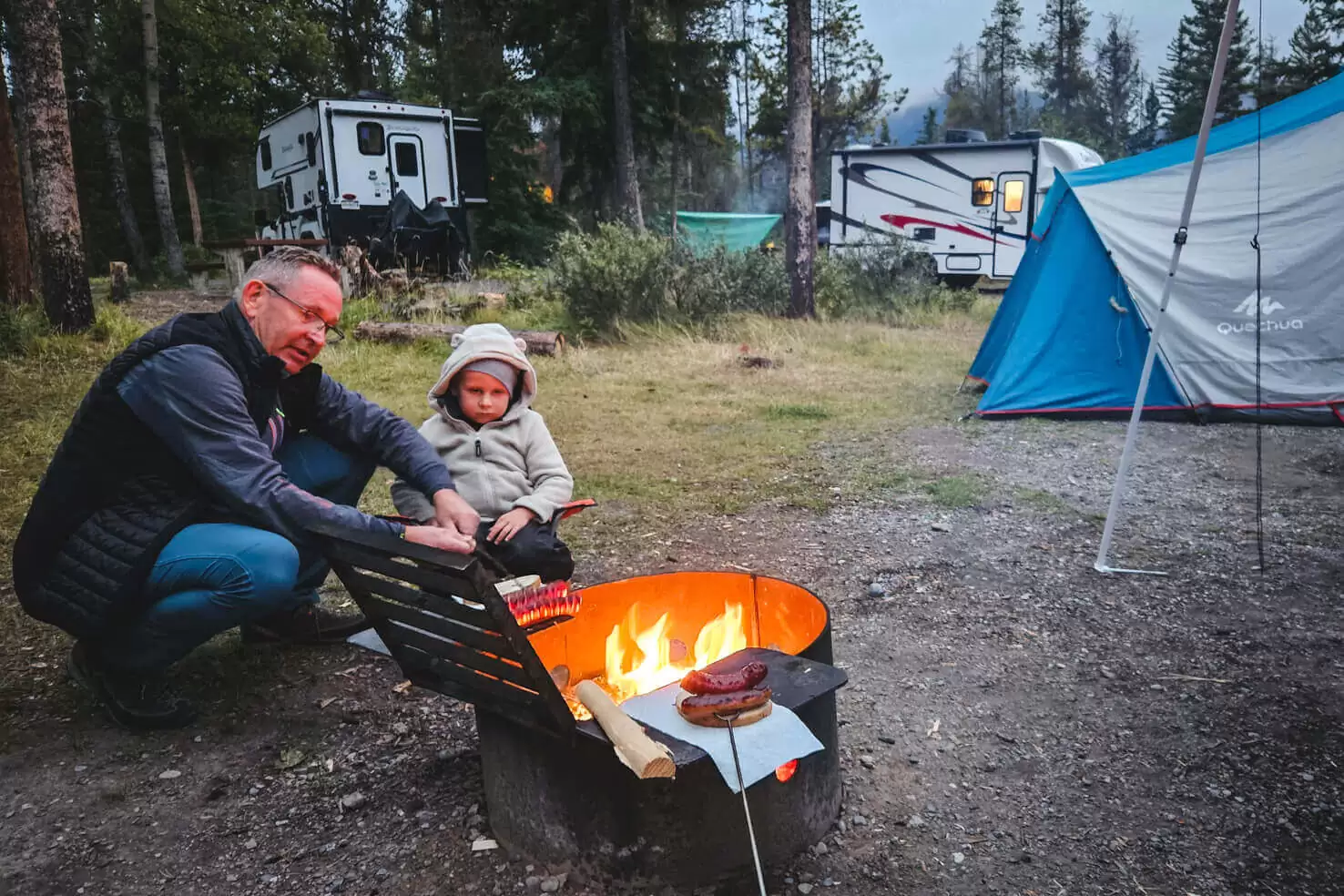
It can’t get any easier than this. Everyone is fed, and no one gets hangry while an adult is cooking.
Now that our kids are 2,5 and 6 and more independent, we might think about cooking at the campsite, we’ll see. Either way, children do not care if dinner is gourmet.
They care if it arrives quickly.
17. Pack More Snacks Than Feels Reasonable
Then pack more.
And after that…pack a secret emergency snack stash (like my emergency candy that lives in the car year-round).
While having an endless supply of snacks is no secret to parents for a great outing, camping somehow transforms children into tiny snack machines.
I think all parents would agree that snacks solve a surprising number of camping problems.
Camping hunger is different. Fresh air plus endless movement equals an insane number of questions about snacks. Some of our winning camping snacks are regulars: fruit pouches, yogurts, apples, crackers, fruit rolls, muffins, pancakes, carrots, and cookies.
Never underestimate snack power.
And last but not least
18. Take Photos…But Put the Phone Away Too
Capture memories. Take photos. Get videos.
But don’t spend the entire trip behind a screen trying to document every moment.
The blurry campfire pictures and muddy kid photos often become favorites later anyway.
Need a bit more encouragement? Here’s why the chaos is worth it
Camping may sometimes feel like parenting on hard mode, but all those outdoor adventures come with some pretty incredible benefits for kids, too.
These are the greatest benefits of taking your kids camping:
1. Kids Build Confidence
Camping gives children opportunities to do things on their own:
- help set up tents
- collect firewood
- carry their backpack
- learn new outdoor skills
Even small jobs make kids feel capable and proud.
2. They Learn Problem-Solving Skills
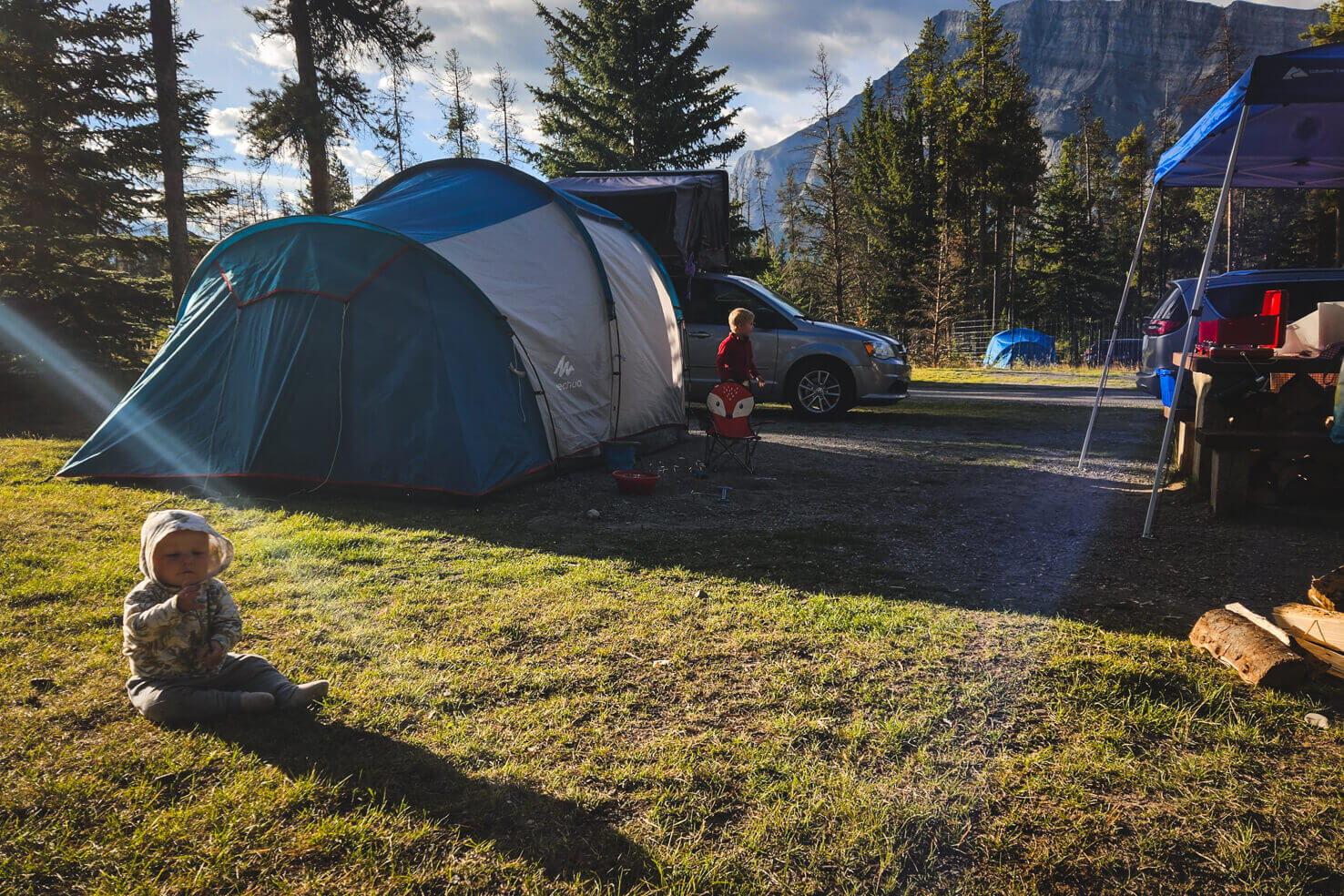
Nature rarely goes exactly according to plan. Maybe it rains. Maybe a headlamp stops working. Maybe somebody forgot socks.
Camping teaches kids to adapt, think creatively, and figure things out.
3. More Outdoor Time Means More Movement
At home, kids are asked to do something all the time – to wash their hands, to eat their dinner, to brush their teeth, to set timer for a screentime, to clean up or do chores. Even kids can feel they’re stuck in a loop of responsibilities
At a campground? Kids naturally move more. They run, bike, climb, hike, explore, and burn energy without feeling like they’re exercising.
Parents often notice they sleep very well afterward, too.
4. Camping Helps Kids Connect With Nature
Kids who spend time outdoors begin noticing things adults often miss:
- tiny insects
- bird sounds
- interesting rocks
- animal tracks
Camping helps build curiosity and appreciation for nature.
5. It Encourages Imagination
Nature is basically one giant toy box. A stick becomes a magic wand. A log becomes a pirate ship. A pile of rocks becomes an entire city.
Unstructured outdoor play sparks creativity in ways screens simply can’t.
6. Family Bonding Happens Naturally
At home, life gets busy. Camping removes many everyday distractions. No rushing to activities. No endless chores. Fewer screens.
Families actually spend time together. And somehow some of the best conversations happen around campfires.
7. Kids Learn Basic Life Skills
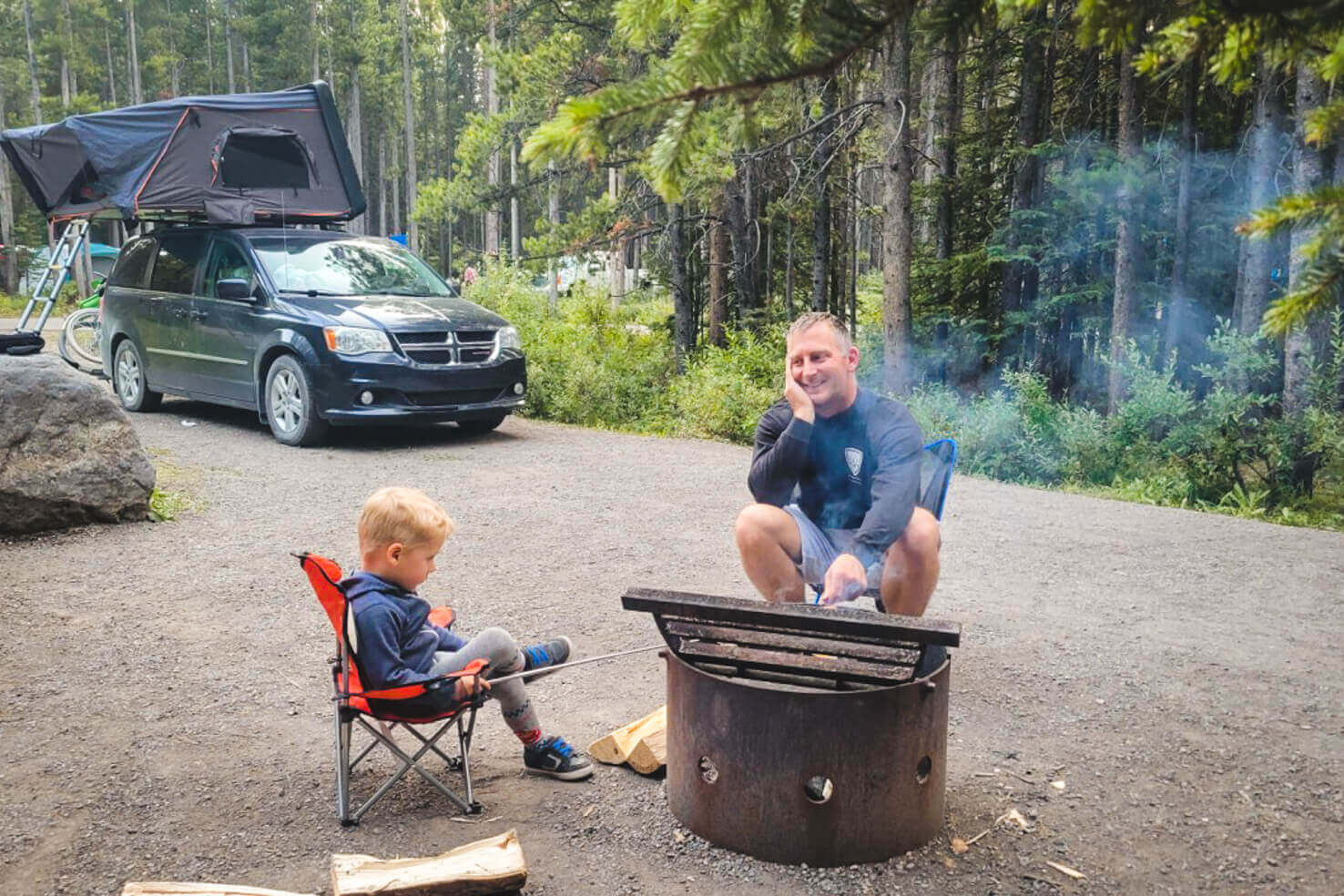
Camping teaches practical skills kids can carry into adulthood:
- preparing food
- helping cook
- organizing gear
- setting up camp
- taking responsibility
Plus kids absolutely love feeling like tiny outdoor experts.
8. Camping Builds Resilience
Not everything goes smoothly while camping. Sometimes it’s cold. Sometimes it rains. Sometimes mosquitoes act like tiny villains.
Experiencing little challenges teaches kids flexibility and resilience.
9. It Creates Core Childhood Memories
Ask adults about childhood camping trips, and they rarely remember perfect details.
They remember:
- campfires
- ghost stories
- fishing
- sleeping in tents
- adventures with siblings
Camping creates those memory-building moments.
10. Kids Learn That Fun Doesn’t Need Screens
One of the biggest surprises for many parents? Kids who constantly ask for screens at home often completely forget about them while camping.
Turns out sticks, bikes, bugs, lakes, and campfires are pretty entertaining too.
My Final Thoughts: Camping With Kids Gets Easier
Camping with kids isn’t always relaxing. It isn’t always peaceful. Sometimes it feels like parenting…just with extra dirt and fewer bathrooms.
But it’s also filled with laughter, adventure, and moments you simply don’t get anywhere else.
The secret isn’t having perfect gear or perfect plans. It’s lowering expectations, packing extra snacks, embracing the mess, and remembering that childhood memories rarely come from perfect days. They come from adventures. And camping delivers plenty of those.
Now pack the snacks. Double the snacks. And go make some memories.