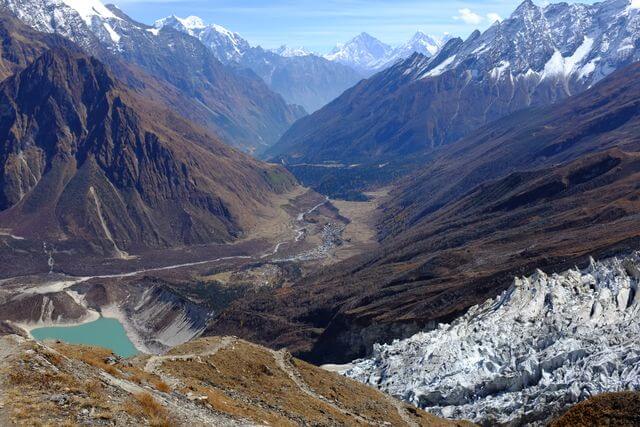
The Manaslu Circuit is becoming one of Nepal’s most popular trekking spots, and for good reason. The trek circles Mt. Manaslu, the eighth tallest mountain in the world, along an ancient trading route to Tibet. You will enjoy breathtaking Himalayan views, a rich Buddhist culture, and fewer crowds compared to treks in the Everest or Annapurna regions.
This trek guide provides all the essential information you need to start your journey. You’ll find a day-by-day schedule that includes walking durations and distances, the latest permit requirements and costs for 2026, difficulty levels, and helpful tips from the trail. This blog post covers everything you need to know about the Manaslu Circuit Trek.
Manaslu Circuit Trek at a Glance
– Trail length: roughly 175 km (109 miles), including acclimatization walks
– Length of the trek: 13 to 16 days; walking for 11 to 14 days
– Trailhead to trail termination: Machha Khola to Dharapani (drive on both ends)
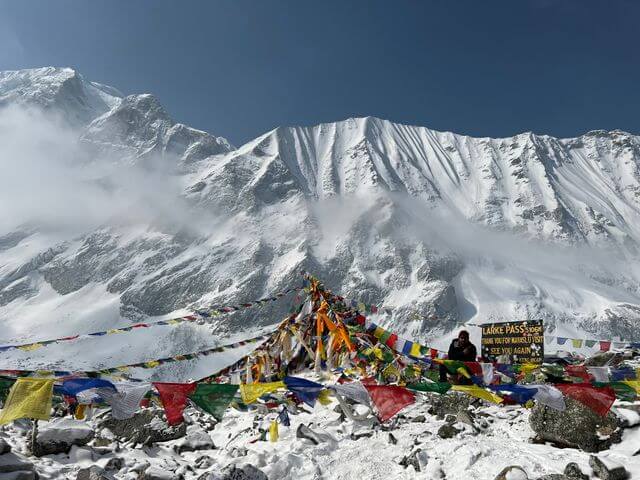
– The Highest point: Larkya La Pass, 5,106 m (16,752 ft)
– Trek difficulty level: Moderate to difficult
– Guide requirement: Required in the restricted area
– Permit requirements: Restricted Area Permit, MCAP, ACAP, and some fee for locals
– Best seasons for this trek: March to May, September to November
– Trek accommodation: Teahouses throughout
Why Choose the Manaslu Circuit Trek?
The Manaslu Circuit offers a quieter and wilder experience than many other Nepalese treks. Two main reasons draw people to this trek.
At first, it was less crowded and more peaceful. Due to restrictions and the challenge of organizing trips, fewer tourists walk this route compared to the Everest Base Camp or Annapurna Circuit. You can enjoy the mountains without the heavy traffic.
Second, the trek features a wide variety of sights. Over just a couple of weeks, you can travel from subtropical river gorges at around 700m elevation, through pine and rhododendron forests, past terraces, monasteries on cliffs, glacial lakes, and Tibetan-style villages, to the snow-covered Larkya La Pass at 5,000m elevation.
Finally, the incredible views of giants like Manaslu, Himalchuli, Ngadi Chuli, Ganesh Himal, and the distant Annapurnas will leave you with unforgettable memories.
How Long Is the Manaslu Circuit Trek?
Most trekkers finish the Manaslu Circuit in 13 to 14 days, including drives to and from the trailhead and important acclimatization days. Around 11 of those days will involve actual walking.
That’s the sensible minimum. Some people try to complete it in 10 or 11 days, but that compromises acclimatization and increases the risks of altitude sickness. If you want to include the Tsum Valley, plan for an additional four to seven days. We recommend allowing one spare day for your trek, just in case weather conditions or snowfall cause delays at the high pass.
Tsum Valley: The Best Side Trip
If you have extra time, consider adding the Tsum Valley. This remote, sacred Buddhist valley branches off the lower Manaslu trail and feels like a different world, featuring ancient gompas, mani walls, and a culture that stands apart from the main circuit.
Many experienced trekkers consider the Tsum Valley a highlight of their entire trip to Nepal. It requires a separate permit and about four to seven extra days, but if your schedule allows, it can turn a special trek into an unforgettable adventure.
Why Is a Licensed Guide Required for the Manaslu Circuit Trek?
Yes. A licensed guide is required for the Manaslu Circuit without exceptions. Because the route passes through a restricted border area, your permits and guide will be checked at various police and conservation posts. If you show up without a guide, you will be turned back.
This differs from areas like Annapurna or Langtang, where enforcement is more relaxed. In Manaslu, the rules are strictly enforced. Beyond the legal aspects, a skilled guide is your safety net. They can read the weather, detect altitude sickness early, manage checkpoints, and secure teahouse accommodations in small villages where rooms fill up quickly.
For a remote, high-altitude trek like this, hiring an experienced guide from a registered agency is worth every rupee.
Manaslu Circuit Trek Permits and Cost (2026)
The Manaslu region requires three main permits plus a small local fee. Your agency will arrange all of them, which include:
– Manaslu Restricted Area Permit (RAP): In peak season (September–November), about US$100 for the first seven days, then approximately US$15 for each additional day. In the off-season (December–August), it costs around US$75 for seven days, then about US$10 for each extra day.
– Manaslu Conservation Area Permit (MCAP): About US$30 per person, paid once.
– Annapurna Conservation Area Permit (ACAP): About US$30 per person, needed because the trek ends inside the Annapurna Conservation Area.
– Local municipality fee: About NPR 1,000 per person
The TIMS card is not needed for Manaslu. If you plan to visit the Tsum Valley, a separate permit will be required.
Total trip cost: A guided Manaslu Circuit trekking package typically ranges from US$1,200 to US$2,800 per person for a 14-to-16-day trip.
This usually includes permits, a licensed guide, transport, and teahouse food and lodging. Smaller groups and solo trekkers may pay more per person, as fixed costs are spread among fewer individuals, while larger group departures reduce the price.
Best Time to Trek the Manaslu Circuit
There are two main trekking seasons.
Autumn (September to November) is the peak trekking season, offering comfortable temperatures and some of the best mountain scenery of the year. The skies are usually clear and stable, the air is dry, and the mountain views are at their best. Nights can be cold, but hiking conditions are comfortable.
Spring (March to May) is also a good time to trek. Temperatures rise, rhododendron forests bloom along the lower trails, and the pass is usually clear of heavy snow by April. This is also the main climbing season for the larger peaks.
Winter (December to February) can be very cold, and the Larkya La Pass may be closed due to snow. The monsoon season from June to August brings heavy rainfall to the region, making the lower trails muddy and slippery while increasing the chances of leeches and occasional landslides.
How Hard Is the Manaslu Circuit Trek?
The Manaslu Circuit is regarded as moderately to seriously challenging, similar to the Everest Base Camp trek but tougher than the Annapurna Circuit. The trek is not technical, so you won’t need ropes or climbing skills. The trek itself isn’t technically difficult, but the long days of walking and high altitude, especially at Larkya La Pass (5,106m), make it a physically demanding adventure.
Most days entail five to seven hours of walking, sometimes more, on steep and uneven trails. The real challenge is the altitude, which peaks at Larkya La Pass at 5,106 m. The day of the pass is long and tough, starting before dawn and including a steep descent that can be icy.
The good news is that completion rates are high for reasonably fit trekkers who maintain a good pace. You don’t have to be an athlete. Improve your fitness with hiking and stair workouts beforehand, acclimatize properly, stay hydrated, and most people of all ages will make it over the pass. If this is your first experience at high altitude, consider starting with a shorter, lower trek, like the Langtang valley trek, to see how your body adjusts before committing to Manaslu.
Manaslu Circuit Trek Day-by-Day Itinerary
This is a classic 13-day itinerary with two acclimatization days. The distances and hiking durations listed are estimates and may differ based on your fitness level and trekking conditions.
Day 1: Kathmandu to Machha Khola
The trek starts with a long, bumpy drive from Kathmandu, following the Budhi Gandaki river deeper into the hills. The scenery changes from busy markets to terraced farmland and steep river gorges. Machha Khola is a simple village to rest in before your trek begins.
Day 2: Machha Khola to Jagat
The walking begins. You follow the river upstream, cross suspension bridges, and pass the hot springs at Tatopani. Much of the lower trail is warm and exposed, so starting early is helpful. Jagat is the first official checkpoint, where your restricted-area permit will be checked for the first time.
Day 3: Jagat to Deng
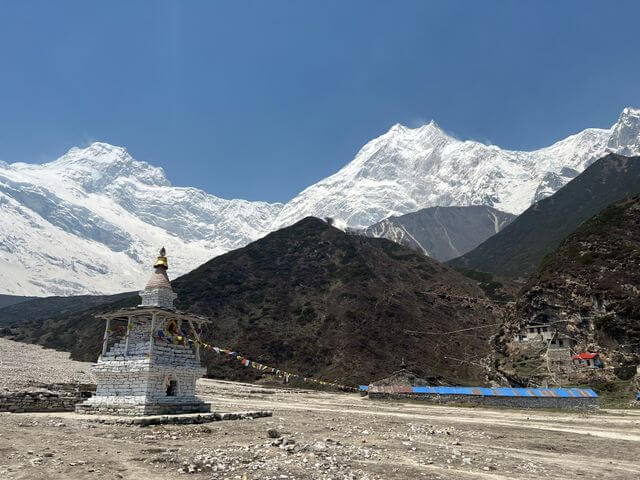
The valley narrows, and the scenery becomes wilder and more beautiful. You will cross the river several times and pass the village of Philim before reaching Deng. Here, the presence of Tibetan-Buddhist culture becomes clear, with your first mani walls and chortens lining the path.
Day 4: Deng to Namrung
Expect a big climbing day, with most of the elevation gain saved for the end. The trail climbs through forests past beautifully carved mani stones. By Namrung, the air feels cooler and thinner, and the crowds are noticeably smaller.
Day 5: Namrung to Lho (or Shyala)
This day is shorter but spectacular. As you climb, the giant peaks become visible. From Lho, you get a stunning view of Mount Manaslu beside the beautiful Ribung Gompa. Some itineraries continue on to Shyala for even better mountain views and gentler acclimatization.
Day 6: Lho to Samagaon
A scenic walk through Shyala, ringed by snow peaks, brings you to Samagaon. This large, traditional Tibetan-style village sits in a wide valley and becomes your base for acclimatisation. If your route allows, approaching via the Pungyen Gompa trail adds a beautiful detour and avoids a steep out-and-back later.
Day 7: Acclimatisation Day at Samagaon
A crucial rest day, best spent climbing high and sleeping low. The big option is the steep hike to Manaslu Base Camp at around 4,800 m, a tough but rewarding out-and-back for those feeling strong. A gentler choice is the walk to the turquoise Birendra Lake and Pungyen Gompa. Either way, you sleep back in Samagaon and give your body time to adjust.
Day 8: Samagaon to Samdo
A short, gentle day that keeps acclimatisation going. The trail follows the Budhi Gandaki toward its source, with wide-open high-country views and the Tibetan border drawing close. Samdo is a windswept village settled by Tibetan refugees, with a strong Tibetan feel.
Day 9: Acclimatisation Day at Samdo
A second acclimatisation day before the pass. Strong trekkers can take the long day hike up toward a viewpoint overlooking the old Tibetan trading route. If altitude is troubling you, an easy rest day in Samdo is just as valid. Use the day to hydrate, rest and prepare your gear for the big crossing.
Day 10: Samdo to Dharmasala (Larkya Phedi)
A short but important climb to the basic stone shelter at the foot of the pass. There’s little here beyond simple shared rooms, but staying close to the pass sets you up for an early start. Rest, eat and hydrate well. You’ll be waking around 3 am.
Day 11: From Dharmasala to Bimthang via Larkya La Pass
The big day. You start in the freezing dark, around 3 to 4 am, when the weather is most stable, and climb slowly to the top of the Larkya La Pass at 5,106 m. The reward is a vast panorama of Himlung, Cheo, Kang Guru and the Annapurna range. Then comes the hard part: a long, steep descent to the beautiful meadow town of Bimthang. We recommend using trekking poles throughout the trek, especially on long descents. During colder months, microspikes or crampons can offer added grip on icy trails.
Day 12: Bimthang to Dharapani
A long, beautiful descent. You drop quickly through rhododendron and pine forest, trading glaciers for green valleys in a single day. The trail meets the Annapurna Circuit near Dharapani. Some itineraries stop walking at Tilje, where a road takes over, then transfer by jeep.
Day 13: Drive from Dharapani to Kathmandu
The trek is done. A jeep takes you down the rough mountain road to Besisahar, then on smoother highways back to Kathmandu. It’s a long day on the road, so sit back, enjoy the changing scenery, and take pride in completing one of Nepal’s most rewarding trekking circuits.
Itinerary note: Add a day for Tsum Valley, an extra acclimatisation stops, or weather buffer as needed. A 13-to-16-day window is normal, and at least one spare day is wise in case snow delays the pass.
Do You Need a Porter as Well as a Guide?
A guide is mandatory, but a porter is optional and highly recommended for most trekkers. Your guide leads and keeps you safe but does not carry your main pack. A 10 kg backpack might not sound heavy at first, but after several days of trekking at altitude, it can feel like a lot. A porter can make the journey far more comfortable.
A common setup is one porter shared between two trekkers, each carrying up to about 20 to 25 kg. A porter-guide, who does both jobs for a smaller load, is a budget middle ground but offers less support than a dedicated guide and porter.
Travel Insurance for the Manaslu Circuit
Comprehensive travel insurance is essential, and it must cover high-altitude trekking and helicopter evacuation. The Manaslu region is remote, and if you’re injured, fall seriously ill, or get stuck by weather above the pass, a helicopter rescue is often the only safe way out.
If an evacuation is needed, keep in mind that helicopter rescues are provided by private companies and can be very costly without proper insurance. Choose a policy that explicitly covers trekking to at least 5,500 m and helicopter evacuation, and carry your policy details with you on the trail.
Manaslu Circuit Trek Packing List
Clothing and layers
- Warm down jacket for high camps and the pass
- Thermal base layers, fleece mid-layer and waterproof shell
- Trekking trousers plus warmer trousers for altitude
- Warm hat, sun hat, buff and insulated gloves
Footwear
- Sturdy, broken-in waterproof trekking boots
- Wool socks and spares
- Microspikes or crampons for the icy Larkya La descent
Sleep and safety
- Four-season sleeping bag (around -15°C)
- Headlamp with backup batteries for crossing the pass before sunrise
- Personal first-aid kit, blister care, and any altitude medication discussed with a doctor
Health and extras
- Water bottles or bladder, plus filter and purification tablets
- High-SPF sunscreen, lip balm and UV sunglasses
- Power bank, since charging is limited and paid
- Always bring cash in Nepali rupees for the whole trek
- Trekking poles, baby wipes and toilet paper
Conclusion
The Manaslu Circuit Trek rewards the extra planning it asks for. In return for a little paperwork and a mandatory guide, you get empty trails, rich Tibetan-Buddhist culture, and some of the most varied scenery in the Himalaya, all crowned by the crossing of the Larkya La Pass.
Prepare your fitness, respect the altitude, pack smart layers, and walk with an experienced team that knows the route. Do that, and this remote circuit may well become the best trek you’ve ever done.
Ready to take on one of Nepal’s last great wilderness trails? Browse our guided Manaslu Circuit Trek packages, with permits, guides, porters and logistics fully handled, and start preparing for the adventure of a lifetime.







Manaslu is what Annapurna was thirty years ago – restricted permit, quiet teahouses and a Larkya La morning you earn rather than buy. The day-by-day acclimatization logic here is the part most guides hand-wave. Saved for planning season.