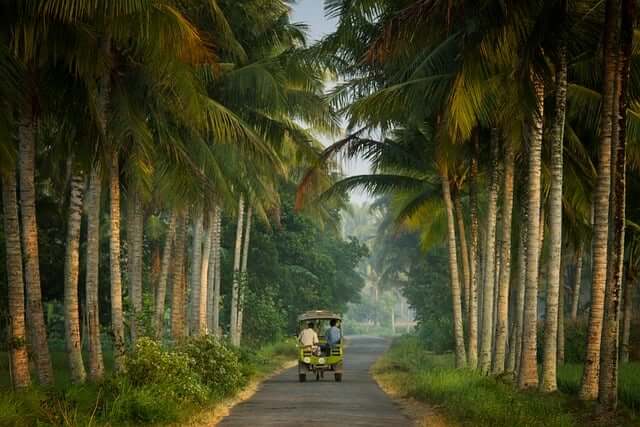
The last time I flew between two Indonesian islands, the flight took fifty minutes and the airport transfers took six hours. That ratio broke something in me. I’d spent more time in a Toyota Hiace crawling past rice paddies than in the air, and I hadn’t touched water once.
This is a problem with land-based tour across an archipelago: the geography fights you constantly. Seventeen thousand islands means seventeen thousand reasons your itinerary falls apart when a road washes out or a ferry runs late. You can plan around it, but you’re always planning around it.
So the travelers I know who move slowest, linger longest, and come home least exhausted have shifted to the water. If you want to explore indonesia by cruise, you’re trading road time for reef time, and that swap changes what a two-week trip can actually feel like.
What “slow” actually means when your hotel moves with you
Slow travel gets misread as “doing less.” In Indonesia, it’s closer to “wasting less.” Your room drifts while you sleep, so a night that would’ve been eight hours in a hotel bed becomes eight hours of repositioning between islands. You wake up somewhere new without packing a bag or finding a driver.
That single change compounds. No airport days. No 5 a.m. van rides to catch a boat that leaves when it wants. No checking in and out of places that all start to blur together by day nine.
I’ve done both versions of this country, and the honest verdict is that land travel wins for depth in one region, while water travel wins for range. If your goal is temples in Java and nothing else, stay on land. If your goal is to see how much variety exists out east, you need a hull under you.

Why the eastern islands reward this approach most
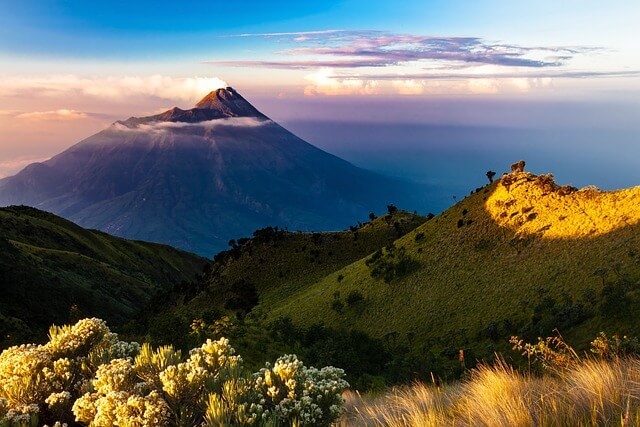
Bali has an international airport, but its roads are often congested. Reaching Komodo, Raja Ampat, and the Spice Islands is a different challenge, as transport links are limited. Overland journeys can involve lengthy, unpredictable connections, while traveling between these remote island groups by land is rarely an option.
The numbers behind that geography are on the record. According to the United Nations, Indonesia is the world’s largest archipelagic state, and the sea makes up roughly three-quarters of its territory. That’s the whole argument in one sentence: most of this country is water, so most of the good way to see it is from the water.
A morning that shows the difference
Picture waking at anchor off a limestone island with no pier, no road, no village visible from the deck. You eat breakfast while the crew drops kayaks. By nine you’re paddling a mangrove channel your land-based friend will never see, because there’s no way to drive to it and no ferry that stops there.
By lunch you’re snorkeling a reef that sees a handful of boats a year. By evening you’re somewhere else entirely. That’s a Tuesday. No tour bus was involved, and nobody handed you a laminated schedule.
The honest catches you should know about
Cruising isn’t automatically better. It’s better for a specific kind of trip, and pretending otherwise would waste your money.
- Cost sits higher than DIY land travel. You’re paying for crew, fuel, food, and access.
- You don’t choose your own pace hour to hour. The itinerary belongs to the ship.
- Rough crossings happen. If you get seasick easily, pick routes and seasons carefully.
- Small ships mean small crowds, which is a plus, but also fewer people to hide behind when you want solitude.
Here’s the part I’d argue about with anyone: for a first trip to eastern Indonesia, the ship wins. Save the independent land loop for your second visit, once you know which island you’d actually want to linger on.
A quick decision guide before you book
Run your own trip through these questions. They’ll sort out whether water travel fits you.
- How many islands do you want to touch? Three or more, and a ship starts saving you real time.
- How much do you hate transit days? If airport lounges drain you, the math favors the boat.
- What’s your tolerance for plans changing? Weather reroutes happen at sea, and the crew usually knows better than your spreadsheet.
- Do you want guided access? Expedition crews get you into places independent travelers can’t reach on their own schedule.
- What’s your budget ceiling? Compare total land costs, including internal flights and wasted hotel nights, against one fare.
The conservation angle nobody mentions at the bar
Well-run small ship operations have a selfish reason to protect what they show you. Their business dies if the reef dies. That incentive doesn’t exist for a day-trip speedboat that never returns to the same bay.
Marine protection isn’t just a marketing line, either. The International Union for Conservation of Nature maintains the global standards for protected areas and species status, and its work shapes which marine zones get real enforcement rather than a paper designation. When you book with operators who follow those frameworks, your fare quietly supports the thing you came to see.
Some of Indonesia’s marine and terrestrial sites carry formal recognition for their global value. The United Nations Educational, Scientific and Cultural Organization lists locations like Komodo National Park on its World Heritage roster, which is exactly the kind of place a small ship can reach and a land convoy struggles to approach.
What this means for your next booking
Land-based trips still make sense for certain experiences. If you want to explore Yogyakarta’s street food or spend time volunteering in one community, staying in one place lets you get to know it better. But if slow travel means spending less time in transit and waking up to something new each morning, exploring by sea offers a different kind of freedom.
Choose the right season, review the itinerary carefully, and ask the operator how they handle changing weather conditions. Then set sail and discover just how much of Indonesia lies beyond its shores.